Petite, tall, curvy: the real rules of proportion dressing
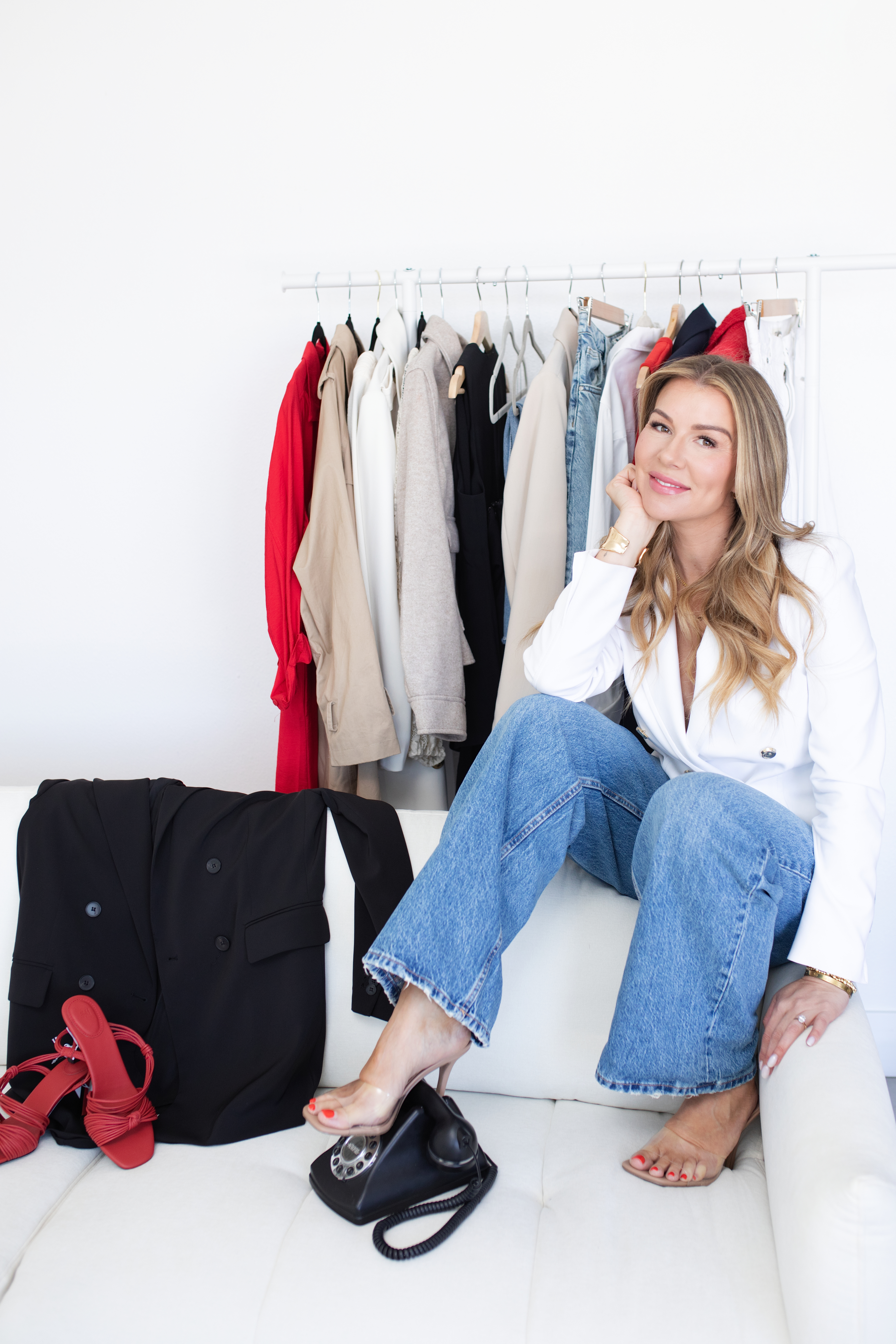
Most proportion dressing advice is written in the language of concealment. Hide your hips. Elongate your torso. Balance your shoulders. As if the body is a problem to be managed rather than a structure to be dressed intelligently. The underlying logic — that clothing can create or redirect visual emphasis — is sound. The framing is not. Proportion dressing is not about hiding anything. It is about understanding how the eye moves across your specific body and making deliberate choices about where to take it.
Every body has a set of proportional characteristics that are simply its own — not good, not bad, just the specific ratios it arrived with. Where your waist falls relative to your hips. Whether you carry more length in your torso or your legs. How wide your shoulders are relative to your hips. Understanding these is the work. Once you have done it, the applications become intuitive.
Petite: the rules that actually hold
Petite dressing is frequently taught as a list of prohibitions. No wide-leg trousers. No oversized blazers. No midi hemlines. These rules exist for a reason — volume and length can overwhelm a shorter frame — but applied rigidly, they produce bland, limited wardrobes. The actual principle is simpler: create one unbroken vertical line wherever you can.
A monochromatic outfit — top and bottom in the same or closely related tones — reads taller because the eye travels up without interruption. A shoe that is close in color to the hem of a trouser does the same. A tucked-in top with a high-rise trouser defines the waist at its natural point rather than creating a visual break at the hip. None of these are restrictions. They are tools. A wide-leg trouser absolutely works on a petite frame — when it is the right length, the right color temperature relative to the top, and worn with a heel that keeps the proportion clean.
"Proportion dressing is the same for every body: understand where your visual lines are, and make a deliberate choice about where to take the eye."
Tall and curvy: working with what you have
Tall women are frequently told they can wear anything, which is technically true and practically useless. The real challenge for tall frames is proportion within a garment rather than across a silhouette. Sleeves are too short. Bodices are wrong-length. Midi hemlines become knee-length. The most important investment for tall women is not in the pieces themselves but in understanding which brands and cuts are sized for a longer torso and longer limbs — and altering everything else accordingly.
For curvy frames, the operative principle is definition rather than coverage. The instinct to cover a body that feels prominent is understandable and almost always counterproductive. A well-defined waist — created by a fitted top, a belt, a structured layer that closes at the hip — reads as intentional and polished regardless of size. Volume that lacks a defined waist, however, reads as shapeless on any frame. The goal is not to minimize. It is to organize.
What proportions can tell you that sizes cannot
Clothing sizes are made for a statistical average that fits almost no one exactly. What actually determines whether a piece works is not the number on the tag but the relationship between where the garment's lines fall and where your body's lines are. A trouser that hits at the narrowest part of your calf looks longer than one that hits at the widest. A top that hits at the widest point of the hip makes the hip look wider. A jacket that ends at the waist rather than the hip shortens the leg. None of this is magic. It is geometry — and once you understand the geometry of your own body, you can apply it to every garment you try on and know within seconds whether it is working with you or against you.
The women who dress best are not the ones with the most advantageous proportions. They are the ones who understand their own proportions clearly enough to work with them — to know which rules apply to them and which do not, and to make decisions based on their specific body rather than a generic guideline written for someone else.
If you have been thinking about working with a stylist, the Style Portrait is where most of my clients start.
Book a Style Portrait — $500 →