How to build a work wardrobe that isn't boring (or expensive)
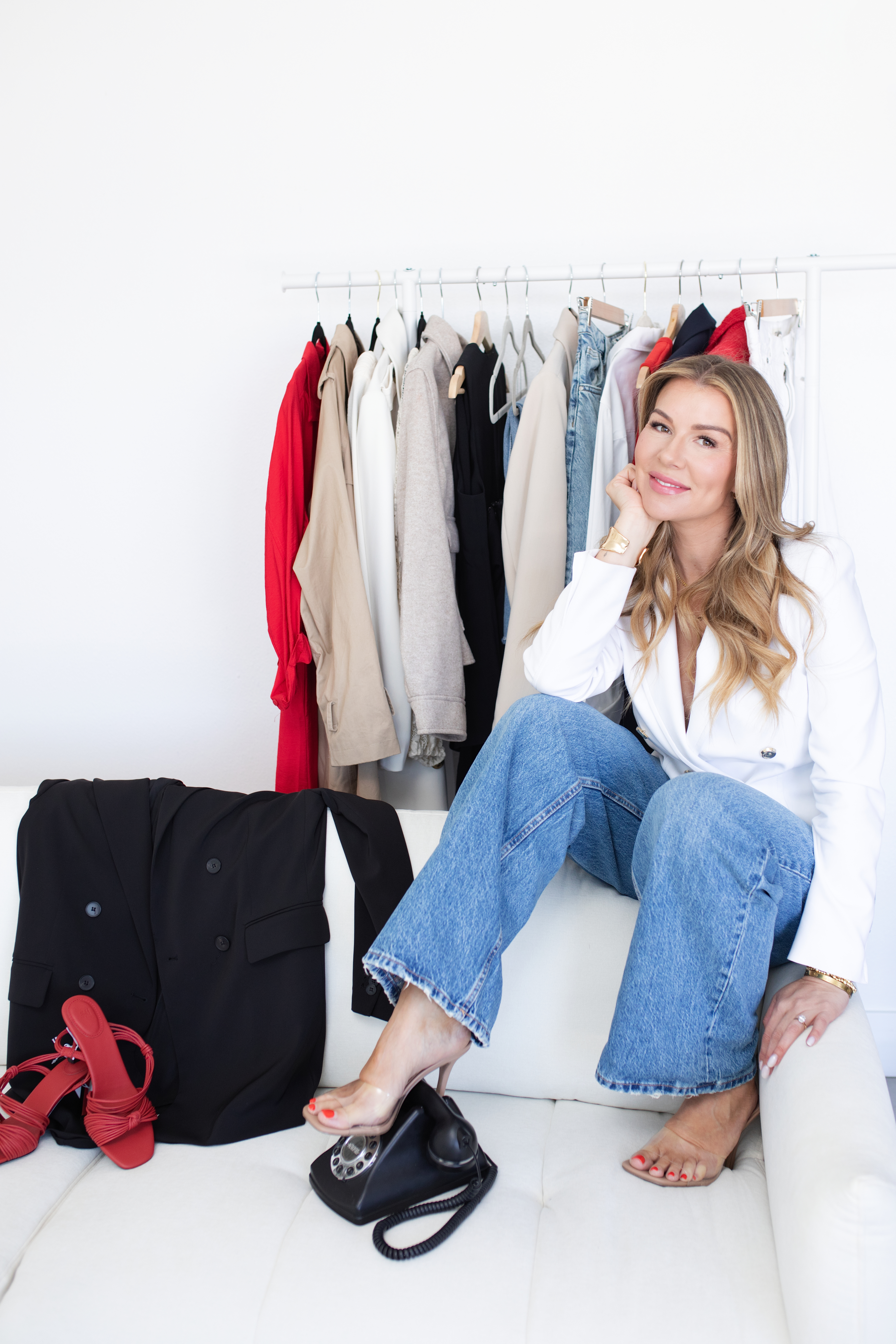
The professional wardrobe is the category where women most often give up on style entirely. They buy safe things in safe colors, wear them in safe combinations, and tell themselves that work clothes are not supposed to be interesting. They are wrong — but I understand how they got there. When the stakes feel high and the time is short, defaulting to a navy blazer feels like the reasonable choice. The problem is that a wardrobe built entirely on reasonable choices produces a woman who is never quite visible and never quite herself.
A work wardrobe does not have to be a uniform. It does have to be a system — and there is a meaningful difference between the two. A uniform is what you reach for when you have not made a decision. A system is a set of pieces that work together, that are appropriate for your specific environment, and that express something true about who you are. Building the system takes thought. Wearing it every day takes almost none.
Define your actual dress code
Before you buy a single thing, you need an honest picture of your environment. Not the theoretical dress code from the employee handbook — your actual day. What does the most senior woman in your office wear? What does a client meeting require versus a regular Tuesday? Do you have video calls where only the top half is visible? Do you walk across a parking lot, sit in air conditioning, and go somewhere after work, all in the same outfit?
Most women dress either slightly below their environment or significantly above it — both of which create a subtle friction that affects how others read them and how they read themselves. The goal is to dress in genuine alignment with where you are and where you want to go. That does not mean costuming yourself as someone you are not. It means choosing pieces that communicate competence and presence, in the specific vocabulary of your specific workplace.
"Your work wardrobe should make you feel like yourself on a very good day — not someone else's version of professional."
The structure of a working wardrobe
A professional wardrobe built for daily use needs: three to four bottoms (two trousers, one skirt, one option that bridges casual and polished depending on styling), four to six tops that cover different formality levels within the same color family, one or two blazers or structured layers that can anchor any combination, one or two dresses that work across multiple contexts with different shoes and layers, and two pairs of shoes that resolve the comfort versus appearance problem.
The connectivity rule applies here too: every bottom should work with at least two tops, every top should work with at least two bottoms, and every layer should work with at least three combinations. If a piece only functions in one pairing, it is a luxury item, not a wardrobe component. A real working wardrobe produces combinations in the morning without deliberation, because the logic is already built into the system.
Where interesting enters without risk
Color and texture are where a professional wardrobe gets personal without becoming unprofessional. A charcoal trouser in a subtle texture. A silk blouse in a muted jewel tone rather than a safe grey. A structured blazer in a warm camel instead of the default black. None of these are loud choices. All of them are memorable ones — the difference between a woman who looks dressed and a woman who looks like she made a decision.
The investment logic for professional pieces is also different than for the rest of your wardrobe. The items that touch the face — jackets, blazers, tops — are worth spending more on because the fabric quality reads immediately. Trousers and skirts can be more moderate because the face reads the body from a distance. Shoes can do enormous work at any price point, as long as the fit is clean and the heel height is something you can actually walk in. The goal is not to spend more. It is to spend more deliberately, on the pieces that earn it.
If you have been thinking about working with a stylist, the Style Portrait is where most of my clients start.
Book a Style Portrait — $500 →